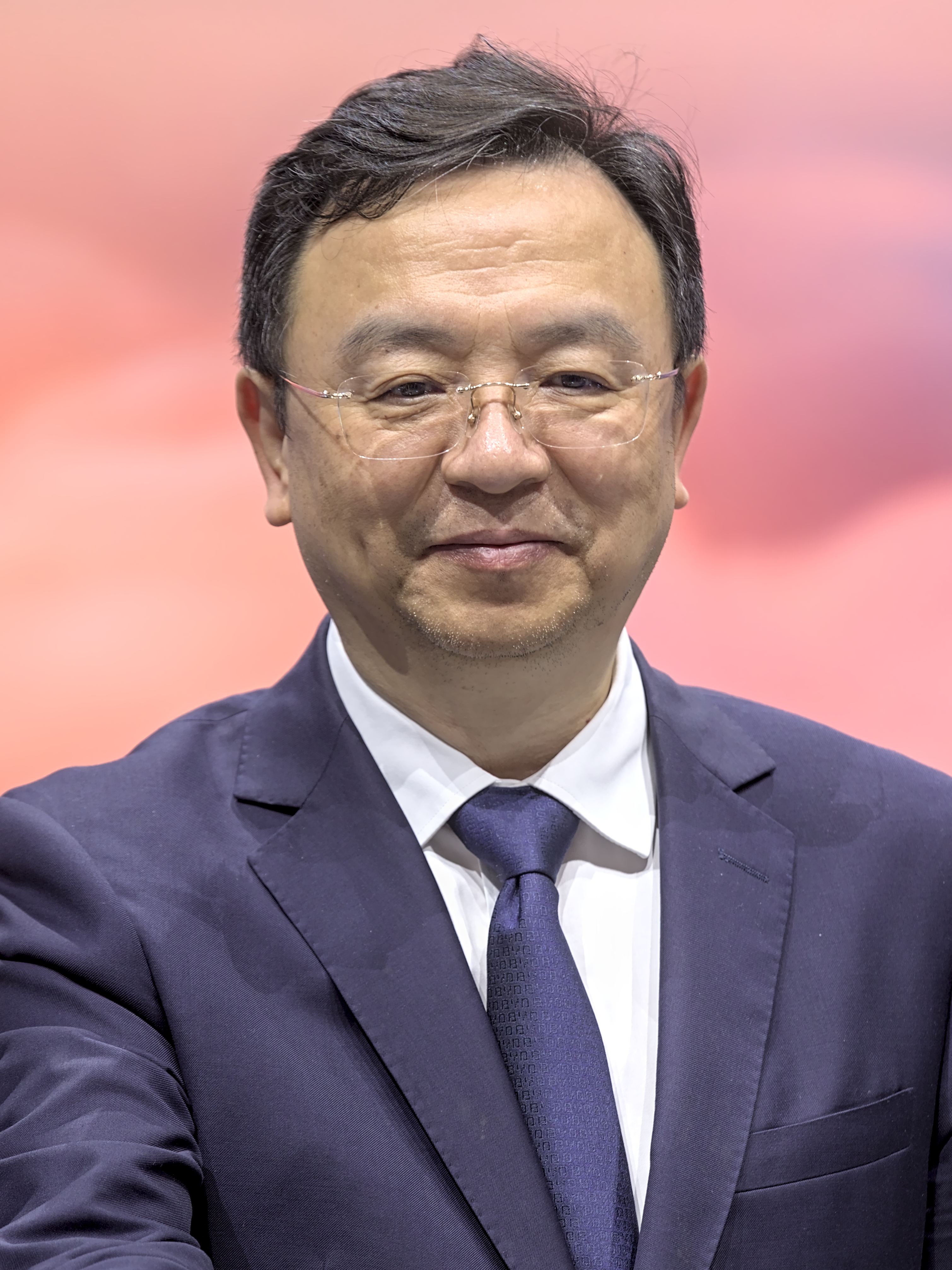
WANG CHUANFU
Founded BYD, which grew from a battery maker to the world's largest electric vehicle manufacturer, overtaking Tesla in unit sales.
Wang Chuanfu started BYD in 1995 making rechargeable batteries. By 2024, BYD was selling more electric vehicles than Tesla. Warren Buffett bought 10% of BYD in 2008 for $230 million, and it became one of his best investments ever. Wang took a battery factory and turned it into a vertically integrated EV empire that makes its own chips, motors, and batteries. Elon Musk once laughed at BYD in an interview. He is not laughing anymore.
Net Worth
$18 billion
Nationality
Chinese
Time Horizon
Long-Term
Risk Appetite
9 / 10
CAREER & BACKGROUND
Wang Chuanfu was born in 1966 in Wuwei, Anhui Province, China. Orphaned as a teenager, he was raised by his older brother and sister.
He studied metallurgy and earned a master's degree from the Central South University of Technology.
In 1995, he founded BYD (Build Your Dreams) in Shenzhen with a $300,000 loan from his cousin. The initial focus was manufacturing rechargeable batteries.
By using manual labor instead of expensive automated production lines, BYD could produce batteries at a fraction of competitors' costs.
Within five years, BYD became one of the world's largest battery manufacturers, supplying Nokia, Motorola, and Samsung. Wang used the battery profits to enter the automobile industry in 2003, buying Tsinchuan Automobile Company.
The logic was simple: if you make the best batteries, you should make the cars that run on them. When Warren Buffett's partner Charlie Munger heard about Wang, he told Buffett that Wang was "a combination of Thomas Edison and Jack Welch." In 2008, Berkshire Hathaway bought 10% of BYD for $230 million.
BYD's EV push accelerated through the 2010s. While Tesla focused on premium EVs, BYD targeted the mass market.
The company's Blade Battery technology, introduced in 2020, solved the safety concerns that plagued lithium-ion batteries.
By 2023, BYD surpassed Tesla in total EV sales (including plug-in hybrids). The company sold over 3 million vehicles that year.
In 2024, it was the world's largest EV maker by unit volume.
COMPANIES & ROLES
BYD Auto is the flagship. China's largest and the world's largest electric vehicle manufacturer by unit sales.
Models range from the $10,000 Seagull to the luxury Yangwang U8 at $150,000. The company also makes electric buses and trucks.
BYD Battery is still a massive business. BYD is the second-largest EV battery manufacturer in the world after CATL.
The Blade Battery technology is considered one of the safest lithium iron phosphate batteries available.
BYD Semiconductor designs and manufactures its own chips for vehicles, reducing dependence on external suppliers.
BYD also makes solar panels, energy storage systems, and consumer electronics. The vertical integration is extreme.
BYD makes nearly every component that goes into its cars.
INVESTING STYLE & PHILOSOPHY
Vertical integration to the extreme. Wang doesn't buy components.
He makes them. Batteries, chips, motors, software, even the factory automation.
This gives BYD cost advantages that competitors who buy from suppliers cannot match.
Volume over margin. BYD sells EVs starting at $10,000.
The profit per car is thin, but at 3+ million units per year, the total profit is enormous. This is the Henry Ford playbook applied to electric vehicles.
Reinvest everything into R&D. BYD employs over 90,000 engineers and spends billions annually on research.
The company files more patents than most tech companies.
THE PLAYBOOK
Risk Approach
Extremely high. Entering the automobile industry as a battery maker was a bet most people thought was insane.
Cars are the most complex consumer product on Earth. BYD had zero automotive experience.
But Wang understood that the auto industry was about to be disrupted by electrification. And the most important component in an EV is the battery.
BYD had the best batteries. Everything else could be learned.
Money Habits
Wang lives in Shenzhen, near BYD's headquarters. By Chinese billionaire standards, he's relatively low-key.
He drives a BYD, naturally. He's known for spending most of his time at the office or in factories rather than at social events.
He doesn't appear on the global conference circuit or party with celebrities. His public persona is that of an engineer who happens to be a billionaire, not the other way around.
He's donated to education and environmental causes, though his philanthropy is modest compared to his wealth.
BIGGEST WIN
Building BYD into the world's largest EV manufacturer. From a $300,000 loan in 1995 to selling 3+ million cars per year in 2024 is one of the greatest industrial achievements of the 21st century.
The Blade Battery technology was a turning point. Traditional lithium-ion batteries had safety issues, catching fire in rare cases.
BYD's Blade Battery uses lithium iron phosphate in a blade-shaped cell that is virtually impossible to set on fire. It changed the safety conversation for the entire EV industry.
Warren Buffett's investment was a massive validation. The $230 million investment in 2008 was worth over $8 billion at its peak.
BIGGEST MISTAKE
BYD's early cars were terrible. When the company entered the auto market in 2003, the first models were cheap knockoffs of existing designs with poor build quality.
The BYD F3 was essentially a copy of the Toyota Corolla. Critics dismissed BYD as another Chinese copycat.
Wang acknowledged this and invested billions in improving quality, design, and original R&D. By the 2020s, BYD's build quality rivaled European manufacturers.
But the early reputation took years to shake.
International expansion has also been challenging. BYD faces tariffs, trade restrictions, and political pushback in Europe and the US, where governments are trying to protect domestic automakers from Chinese competition.
FINANCIAL PHILOSOPHY
Control the entire value chain. Every component you buy from outside is a margin you give away and a dependency you accept.
Make everything yourself.
Democratize electric vehicles. Wang believes that EVs should not be luxury products.
His mission is to make electric cars affordable for everyone, starting with China and then the world.
Technology is the only durable advantage. BYD's moat is not brand or scale alone.
It is the technological lead in battery chemistry, semiconductor design, and manufacturing processes.
FAMILY & PERSONAL LIFE
Wang's personal life is marked by early tragedy. Both his parents died when he was a teenager.
His older brother Wang Chuan-fang and sister raised him, sacrificing their own education to support his studies.
He is married with children. The family connection to BYD's founding is deeply personal.
His cousin provided the initial $300,000 loan that started the company.
EDUCATION
Wang earned a bachelor's degree in metallurgy from Central South University and a master's degree from the Beijing Non-Ferrous Metal Research Institute. His materials science background was directly relevant to battery chemistry and later to EV manufacturing.
BOOKS & RESOURCES
Wang has not written a book
His story is covered in books about China's EV revolution and industrial transformation
Ludicrous by Edward Niedermeyer covers the EV industry competition between Tesla and BYD
"The Electric Vehicle Revolution" by various authors covers the global transition to EVs
QUOTES (5)
Electric vehicles should not be luxury products. They should be affordable for everyone.
Every component you buy from outside is a margin you give away. Make everything yourself.
We started by making batteries for phones. Now we make the cars that phones control.
NETFIGO SCORE
Proprietary 5-dimension investor rating
Risk Appetite
Contrarian Index
Track Record
Accessibility
Time Horizon
Related Profiles
Head-to-Head
Compare Wang Chuanfu vs another investor.