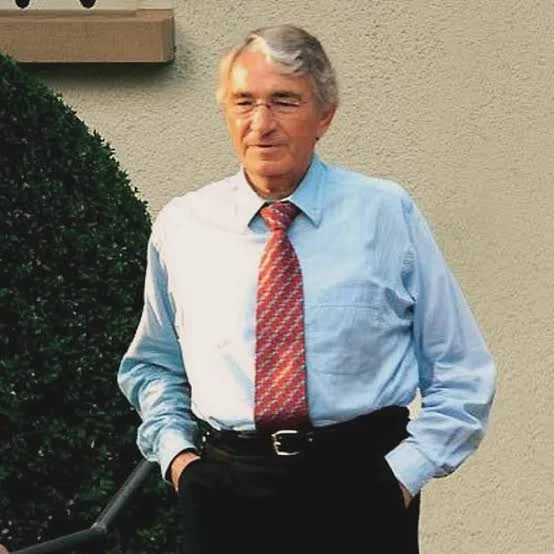
DIETER SCHWARZ
Built Lidl and Kaufland into the world's fourth-largest retailer while never giving a public interview.
Dieter Schwarz turned his father's small wholesale business into a $150 billion retail empire with 12,000 stores in 31 countries. He has never given a television interview. There are fewer than five confirmed photographs of him in existence. He's the richest person in Germany and possibly the most invisible billionaire on Earth. Somehow, that strategy worked better than any PR firm ever could.
Net Worth
$47 billion
Nationality
German
Time Horizon
Generational
Risk Appetite
3 / 10
CAREER & BACKGROUND
Dieter Schwarz was born in 1939 in Heilbronn, Germany. His father Josef ran a small wholesale fruit business called Lidl & Schwarz.
Young Dieter joined the family company in 1960 and started experimenting with a no-frills discount grocery format. By 1973, he had opened the first standalone Lidl store.
The concept was brutally simple. Strip out everything that costs money.
No fancy shelving. No brand-name displays.
Fewer products than a traditional supermarket, maybe 2,000 items versus 30,000. But every single item priced to undercut the competition.
It worked. Lidl spread across Germany like a quiet invasion.
Then Austria. Then France, Spain, the UK, and eventually the United States in 2017.
Today the Schwarz Group, which includes both Lidl and the larger-format Kaufland chain, operates over 12,000 stores in 31 countries and generates roughly $150 billion in annual revenue.
Schwarz separated from Lidl & Schwarz's original partner in the 1970s, buying out the Lidl family's share. The Lidl name stayed.
The family didn't. He ran the company with obsessive cost control.
Executives flew economy class. Company headquarters looked like a warehouse.
Even the CEO's office had no decorations.
In 2004, Schwarz stepped back from day-to-day management but remained the sole owner. He transferred ownership to the Dieter Schwarz Foundation in stages, though he kept operational control.
The foundation has donated over $1 billion to education and research in the Heilbronn area.
COMPANIES & ROLES
Lidl is the crown jewel. Over 11,500 stores across 31 countries, competing head-to-head with Aldi as Europe's dominant discount grocer.
In 2017, Lidl entered the US market, opening stores from the East Coast inward. It's now in nearly 200 US locations.
Kaufland is the other half. A hypermarket chain with about 1,500 stores across Europe.
Think of it as the big-box version of Lidl. Bigger stores, wider selection, same cost-obsessed DNA.
Together they form the Schwarz Group, the fourth-largest retailer in the world by revenue, behind only Walmart, Amazon, and Costco. The group employs over 575,000 people.
Schwarz also created the Schwarz IT division, which builds the group's technology in-house. No outsourcing.
They even built their own cloud infrastructure rather than rely on AWS or Google Cloud. That's a level of control most retailers don't attempt.
INVESTING STYLE & PHILOSOPHY
Schwarz doesn't invest in public markets or venture capital. His entire fortune is the Schwarz Group.
One company. One bet.
Total control.
His approach to business is the investing philosophy. Every decision filters through one question: does this lower the price for the customer?
If the answer is no, it doesn't happen. Store layouts are designed for efficiency, not aesthetics.
Product ranges are curated to minimize waste. Private label brands make up the majority of shelf space because they carry higher margins.
He thinks in decades, not quarters. Lidl's US expansion was planned for years before the first store opened.
The company accepted losses for years to build scale, knowing the discount model would eventually win on volume.
THE PLAYBOOK
Risk Approach
Extremely conservative in the traditional sense. Zero debt philosophy for most of the company's history.
Schwarz built Lidl with retained earnings, not borrowed money. The company has never gone public and never taken outside investment.
But there's a contrarian risk hiding in that conservatism. Putting your entire $47 billion fortune into a single private company is the most concentrated bet imaginable.
No diversification. No hedge.
If discount grocery retailing somehow collapses, everything goes. Of course, people will always need cheap groceries, which is exactly why the bet has worked for 50 years.
Money Habits
Schwarz lives in Heilbronn, the same mid-sized German city where he was born. Not Munich.
Not Berlin. Not a Swiss tax haven.
Heilbronn, population 130,000.
He drives himself to work. He has never owned a yacht, private jet, or vacation compound that anyone knows about.
He doesn't attend industry conferences. He doesn't speak at events.
His philanthropy is massive but entirely local. The Dieter Schwarz Foundation has funded a new campus for the Heilbronn University of Applied Sciences, an AI research center, and multiple educational programs.
Over $1 billion donated, all to the Heilbronn region. He's essentially rebuilding his hometown with grocery money.
The irony is beautiful. The man who got rich selling discount groceries to price-conscious Europeans lives exactly like the customers he serves.
BIGGEST WIN
Taking Lidl international. In the 1990s, German discount retailing was already a crowded market with Aldi dominating.
Schwarz bet that the Lidl model could work across borders and cultures.
He was right. Lidl entered the UK and immediately put pressure on Tesco and Sainsbury's.
It entered France and took market share from Carrefour. Spain, Italy, Poland, all fell in line.
The US expansion, launched in 2017, was the ultimate test. American grocery is brutal.
Walmart has 4,700 stores and economies of scale that seem impossible to match. But Lidl carved out a niche with a store format that European expats loved and curious Americans tried.
Nearly 200 US stores and growing.
The Schwarz Group now does roughly $150 billion in annual revenue. That's more than Target, Costco's international operations, and most European retailers combined.
BIGGEST MISTAKE
The US launch was rockier than planned. Lidl originally announced it would open 100 stores on the East Coast in its first year.
It opened about 20. The company underestimated real estate costs, the complexity of US supply chains, and American shopping habits.
Early stores were smaller than what Americans expected. The product mix felt foreign.
Some locations were in rural areas where brand loyalty to Walmart was nearly unbreakable.
Lidl quietly scaled back its ambitions, closed some underperforming locations, and recalibrated. The US operation eventually found its footing, but the initial stumble cost hundreds of millions in write-downs and delayed the breakeven timeline by years.
FINANCIAL PHILOSOPHY
Cost is everything. Schwarz once said the only sustainable competitive advantage in retail is being the cheapest.
Not the fanciest, not the most convenient. The cheapest.
He applied this to his own life too. Executives at Schwarz Group were famously banned from flying business class.
Company cars were mid-range models. The headquarters in Neckarsulm looks more like a logistics center than a corporate office.
The philosophy extends to how the company treats complexity. Fewer products means fewer suppliers, which means more leverage with each one.
Lidl typically carries about 2,000 items. A typical American supermarket carries 30,000.
Less choice, but better prices on everything they do carry.
FAMILY & PERSONAL LIFE
Schwarz is intensely private about his personal life. He married and has children, but their names are rarely mentioned in public.
His family does not appear in society pages, charity galas, or luxury lifestyle magazines.
What is known is that he transferred much of his wealth to the Dieter Schwarz Foundation, which his family helps oversee. The foundation is the largest private charitable foundation in Germany after the Robert Bosch Foundation.
He lives a life that would be unrecognizable to most billionaires. No entourage.
No public persona. Just a very wealthy man who goes to work, comes home, and apparently finds that sufficient.
EDUCATION
Schwarz apprenticed in the family business rather than attending university. He learned retail from the ground up, stocking shelves and managing inventory in his father's wholesale operation.
This practical education shows in everything about Lidl. The company is run by operators, not MBA graduates.
Store managers are trained to think about cost per square meter, not strategic frameworks. Schwarz once reportedly said he learned more from watching customers choose between two tomato brands than he could from any business school.
BOOKS & RESOURCES
Schwarz has never written a book and never endorsed one publicly
He doesn't do interviews, so there are no recommended reading lists
Covers the discount retail revolution that Schwarz helped create
Explains how German discount grocers reshaped global retail. Both are essential reading for understanding why stripping out cost beats adding features in grocery
As an Amazon Associate, Netfigo earns from qualifying purchases. Book links above may be affiliate links.
QUOTES (5)
I learned more from watching customers choose between two tomato brands than from any business school.
NETFIGO SCORE
Proprietary 5-dimension investor rating
Risk Appetite
Contrarian Index
Track Record
Accessibility
Time Horizon
Related Profiles
Head-to-Head
Compare Dieter Schwarz vs another investor.