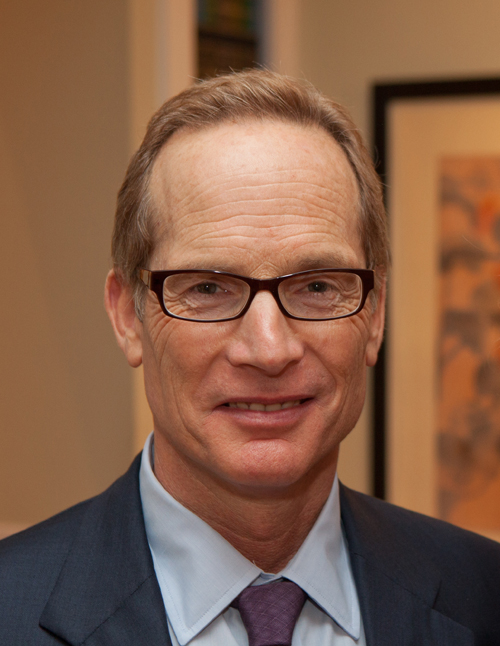
GLENN DUBIN
Co-founded Highbridge Capital Management, a pioneering multi-strategy hedge fund acquired by JPMorgan
Glenn Dubin built Highbridge Capital Management from a small multi-strategy shop into a $35 billion powerhouse that JPMorgan Chase wanted badly enough to buy in stages starting in 2004. He grew up in a housing project in Washington Heights, Manhattan — and ended up owning a $100 million compound in Palm Beach. That's a swing most Hollywood screenwriters would call unrealistic. JPMorgan still runs the Highbridge name, which means Dubin essentially sold his brand and kept his fortune.
Net Worth
$2.8 billion
Nationality
American
Time Horizon
Long-Term
Risk Appetite
5 / 10
Net Worth Context
- · Still a billionaire — just the quiet kind at the end of the table.
CAREER & BACKGROUND
Dubin grew up in the Washington Heights neighborhood of upper Manhattan. Not the gentrified version — the 1970s version with high crime rates and limited opportunities.
He and his childhood friend Henry Swieca shared an ambition to get out through finance.
He started on Wall Street in the early 1980s after graduating from NYU. He cut his teeth at Mace Neufeld and Kidder Peabody before teaming up with Swieca in 1992 to launch Highbridge Capital Management.
The fund started small — around $35 million — and focused on convertible bond arbitrage.
Highbridge grew rapidly through the late 1990s and 2000s by adding strategies: statistical arbitrage, credit trading, distressed debt, and equity long/short. By the mid-2000s, they were managing over $35 billion.
The growth caught JPMorgan's attention.
JPMorgan acquired a majority stake in Highbridge in 2004 and completed the acquisition by 2009. Dubin stayed on as chairman and eventually transitioned out to focus on his own investments through Dubin & Co, his family office.
He'd gone from a kid in public housing to a billionaire who sold his hedge fund to America's biggest bank.
COMPANIES & ROLES
Highbridge Capital Management was the crown jewel. Co-founded with Henry Swieca in 1992, it grew from $35 million to $35 billion and became one of the most respected multi-strategy hedge funds in the world.
JPMorgan's acquisition validated Highbridge as an institutional-quality operation.
Dubin & Co is his current family office, managing his personal fortune across public markets, private equity, real estate, and venture investments. He's been an active investor in technology and healthcare companies.
He also co-founded Engineers Gate, a quantitative trading firm, in 2014 with a focus on systematic strategies. It represented a bet on the future of algorithmic investing.
INVESTING STYLE & PHILOSOPHY
Dubin is a multi-strategy investor who believes in diversification across uncorrelated return streams. At Highbridge, the model was to run multiple strategies under one roof — convertible arbitrage, stat arb, credit, equity — so that when one strategy struggled, others picked up the slack.
He's a process-oriented investor. He cares less about any single trade and more about whether the system is working.
The machine matters more than any individual gear.
Through Dubin & Co, his approach has shifted toward longer-term, more concentrated investments. He makes fewer bets but bigger ones — particularly in technology and healthcare where he sees structural growth.
THE PLAYBOOK
Risk Approach
At Highbridge, risk was managed obsessively. The firm had one of the most sophisticated risk management systems in the industry, monitoring every position across every strategy in real time.
Dubin insisted on understanding the firm's total exposure at all times.
His personal risk tolerance is moderate. He's already made his fortune, so preservation matters as much as growth.
He diversifies across asset classes and geographies. He's not trying to double his money — he's trying to make sure it compounds steadily for generations.
The 2008 crisis tested Highbridge severely. Being part of JPMorgan actually helped — the bank's balance sheet provided stability that independent hedge funds didn't have.
But some strategies still suffered significant losses.
Money Habits
Dubin lives large but not loudly. He owns a massive compound in Palm Beach reportedly worth over $100 million, plus properties in New York and the Hamptons.
He's a serious art collector with works by major contemporary artists.
He's philanthropically active, particularly in education and healthcare. He and his wife have donated tens of millions to Mount Sinai Hospital and various educational institutions.
He sits on multiple nonprofit boards.
He came from nothing — a public housing project in one of Manhattan's toughest neighborhoods — which gives his success story a Horatio Alger quality that's increasingly rare in hedge fund world, where most founders grew up wealthy.
BIGGEST WIN
Building Highbridge from $35 million to $35 billion and then selling it to JPMorgan is the obvious headline win — a 1,000x growth story in assets under management. The JPMorgan acquisition reportedly valued Highbridge at over $1 billion, with Dubin personally receiving hundreds of millions.
But the quieter win was the consistency. Highbridge delivered positive returns in most years across multiple strategies.
The firm's convertible arbitrage strategy was particularly strong in the early years, generating 15-20% annual returns with relatively low volatility. In the hedge fund world, where half of all funds die within five years, running one successfully for over two decades is the real achievement.
BIGGEST MISTAKE
The Jeffrey Epstein association has been a major reputational stain. Dubin had a social relationship with Epstein that continued after Epstein's 2008 conviction.
While Dubin has denied any involvement in Epstein's crimes, the association has led to significant public scrutiny and media attention that no amount of money can easily erase.
On the investment side, some of Highbridge's strategies underperformed after the JPMorgan acquisition. The integration was rocky — hedge fund culture and bank culture don't always mix.
Several top traders left for competitors, taking their P&L with them. By the time Dubin fully transitioned out, Highbridge had shrunk significantly from its peak.
FINANCIAL PHILOSOPHY
Dubin believes the best investment is in systems, not ideas. A great idea with a bad process will fail.
A mediocre idea with a great process will eventually find great ideas.
He's a pragmatist about markets. He doesn't think he can predict the future — he thinks he can build a machine that adapts to whatever the future brings.
That's why multi-strategy worked for Highbridge and why he launched a quant firm after leaving.
He also believes deeply in the power of partnership. His relationship with Henry Swieca lasted decades and produced billions.
He credits the partnership model with forcing better decisions — two heads genuinely being better than one.
FAMILY & PERSONAL LIFE
Dubin is married to Eva Andersson-Dubin, a former model and physician. They have three children.
His wife is a practicing internist, which is unusual in the billionaire spouse world — she has her own career completely independent of his wealth.
The family is active in New York and Palm Beach social circles. Dubin's rags-to-riches backstory — Washington Heights housing projects to Palm Beach billionaire — is well known in financial circles and frequently cited as motivation by young traders from similar backgrounds.
EDUCATION
Dubin graduated from NYU's Stern School of Business. No Ivy League pedigree, no family connections.
He earned his way in through talent and work ethic. He's spoken about how growing up in Washington Heights gave him the hunger and street smarts that Harvard MBAs don't have.
In his case, the chip on his shoulder was worth more than any diploma.
BOOKS & RESOURCES
Covers Jim Simons and Renaissance, a firm Dubin admired and whose numbers-driven approach influenced Engineers Gate
Provides the history of the hedge fund industry that Dubin helped build
As an Amazon Associate, Netfigo earns from qualifying purchases. Book links above may be affiliate links.
QUOTES (5)
A great idea with a bad process will fail every time. A great process will eventually find great ideas on its own.
I grew up in a housing project. The thing about starting with nothing is you're not afraid of losing it.
The best partnerships are ones where you disagree often enough to avoid mistakes but agree enough to actually get things done.
Multi-strategy isn't about hedging your bets. It's about having multiple ways to be right.
Selling a business you built is harder than building it. But knowing when to sell is the most important skill a founder can have.
NETFIGO SCORE
Proprietary 5-dimension investor rating
Risk Appetite
Contrarian Index
Track Record
Accessibility
Time Horizon
Related Profiles
Investors
Head-to-Head
Compare Glenn Dubin vs another investor.