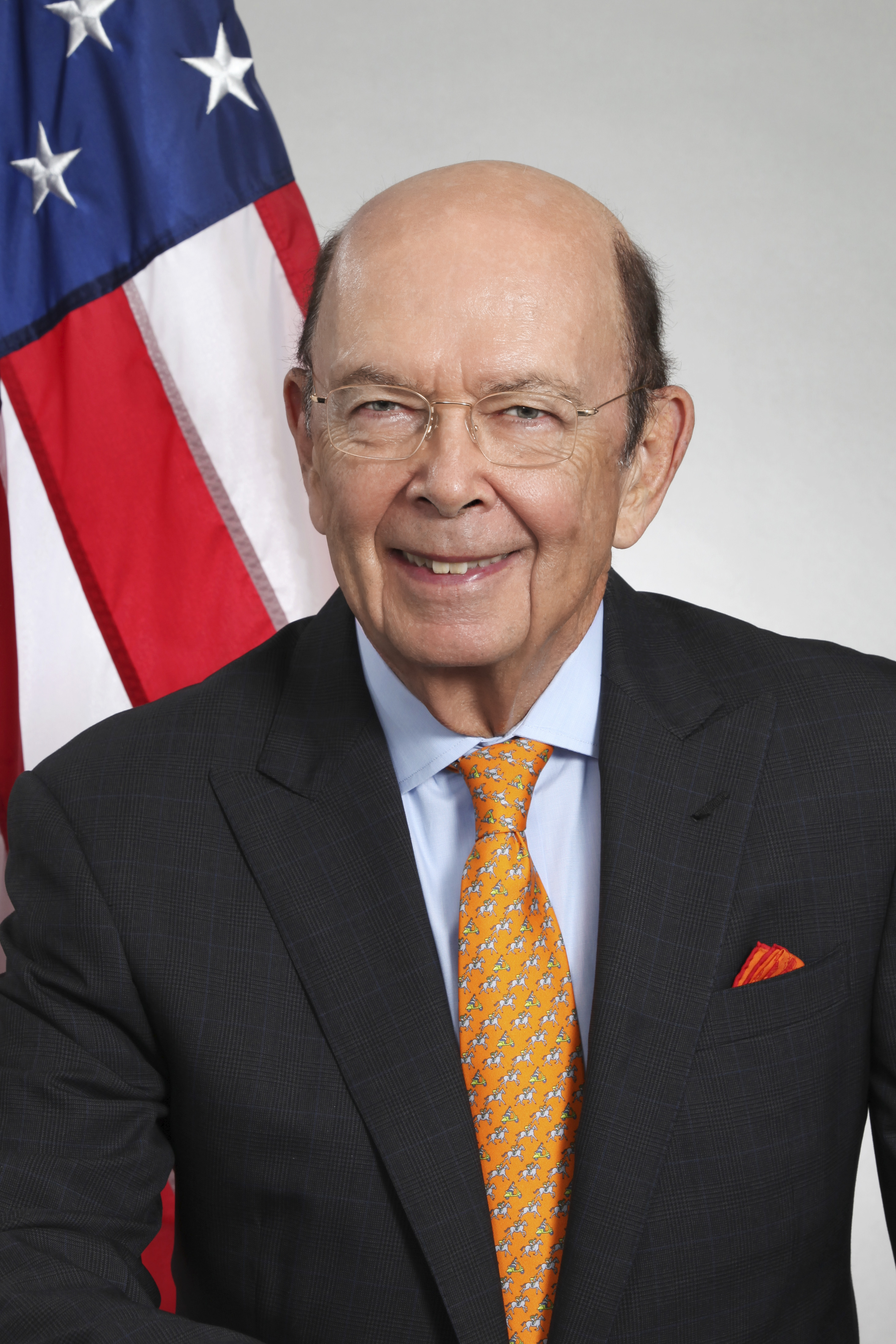
WILBUR ROSS
The "King of Bankruptcy" who made billions buying distressed companies in steel, coal, and textiles, then served as Trump's Commerce Secretary.
Wilbur Ross spent 25 years at Rothschild advising on bankruptcies, then realized he should be buying the bankrupt companies himself. He bought dying American steel mills for pennies, merged them into International Steel Group, and sold to Mittal for $4.5 billion. He did the same with coal and textiles. Forbes once listed him at $2.9 billion. Then Forbes discovered his net worth was grossly inflated and dropped him to $700 million. Then he became Trump's Commerce Secretary. The King of Bankruptcy became the King of Overstatement.
Net Worth
$700 million
Nationality
American
Time Horizon
Medium-Term
Risk Appetite
7 / 10
CAREER & BACKGROUND
Wilbur Ross was born in 1937 in Weehawken, New Jersey. He went to Yale and Harvard Business School, then spent 24 years at Rothschild Inc., where he became the go-to advisor for bankrupt companies.
He restructured bankruptcies for TWA, Texaco, and dozens of others.
In 2000, at age 62, Ross finally stopped advising and started buying. He founded WL Ross & Co.
and began acquiring distressed assets in industries everyone else had abandoned.
His first big play was steel. American steel mills were going bankrupt left and right, crushed by cheap imports and legacy pension costs.
Ross bought Bethlehem Steel, LTV Steel, Weirton Steel, and others out of bankruptcy. He merged them into International Steel Group, cut costs, renegotiated union contracts (eliminating retiree healthcare benefits, which was controversial), and waited for the steel cycle to turn.
When China's demand sent steel prices soaring, Ross sold ISG to Mittal Steel in 2005 for $4.5 billion. He reportedly turned a $90 million investment into over $2.5 billion in profit.
He repeated the playbook in textiles (buying Burlington Industries), coal (founding International Coal Group after the Sago mine disaster), and auto parts. Each time: buy bankrupt, cut costs, wait for the cycle.
In 2017, he became Secretary of Commerce under President Trump. His tenure was marked by trade wars with China, steel tariffs, and a controversy over his financial disclosures.
Forbes investigated his net worth claims and concluded he had exaggerated his wealth by over $2 billion.
COMPANIES & ROLES
WL Ross & Co. was his private equity firm, managing over $12 billion in assets at its peak.
He sold the firm to Invesco in 2006 for $375 million but stayed on to manage the funds.
International Steel Group was the masterwork. A combination of bankrupt American steel companies that became the largest integrated steel producer in the US before being sold to Mittal.
International Coal Group, formed after the Sago mine disaster in 2006, consolidated bankrupt coal operations in Appalachia. The company went public and was later sold to Arch Coal.
Navigator Holdings, a shipping company specializing in liquefied gas tankers, was another Ross investment.
INVESTING STYLE & PHILOSOPHY
Classic vulture investing. Buy assets in bankruptcy when nobody else wants them.
Strip out the costs that made them unprofitable (usually labor costs and pension obligations). Wait for the industry cycle to improve.
Sell.
The approach requires a thick skin. When you buy a bankrupt company, you're usually eliminating jobs, cutting benefits, and renegotiating with unions.
Ross was comfortable with that. He saw it as saving companies that would otherwise disappear entirely.
He focused exclusively on old-economy industries: steel, coal, textiles, auto parts, shipping. No technology.
No healthcare. Just industries in distress where he could buy physical assets below replacement cost.
THE PLAYBOOK
Risk Approach
High risk, deep research. Buying bankrupt companies is inherently risky.
The assets might be worthless. The industry might never recover.
Union negotiations might fail. Environmental liabilities might be enormous.
But Ross mitigated this through exhaustive due diligence. He spent 24 years at Rothschild studying why companies fail before he started buying them.
He knew more about corporate bankruptcy than almost anyone in America.
Money Habits
Ross is famous for his art collection, which includes works by Magritte, and his Palm Beach lifestyle. He's been a fixture of Manhattan and Palm Beach society for decades.
The Forbes wealth controversy is his most defining personal fact. For years, Forbes listed him at around $2.9 billion.
In 2018, investigative journalist Dan Alexander discovered that Ross had been inflating his net worth by claiming assets that belonged to his investors, not to him personally. Forbes dropped his estimated net worth to $700 million.
Ross denied the discrepancy. The incident raised questions about how many other billionaires were exaggerating their wealth to Forbes.
BIGGEST WIN
International Steel Group. Ross invested roughly $90 million to acquire bankrupt American steel companies.
He merged them, cut costs, eliminated legacy pension obligations, and sold the combined entity to Mittal Steel for $4.5 billion. Even accounting for other investors' shares, Ross personally made over $2 billion on the deal.
The timing was perfect but not accidental. Ross understood that steel was cyclical and that Chinese demand was about to create a supercycle.
He positioned himself at the bottom and exited near the top.
BIGGEST MISTAKE
The Forbes wealth controversy. Whether it was intentional exaggeration or a genuine misunderstanding of his fund structures, the revelation that Ross's net worth was roughly $2 billion less than claimed was professionally embarrassing.
International Coal Group was also controversial. The company was formed partly from the Sago Mine, where 12 miners died in a 2006 explosion.
Ross was criticized for prioritizing cost-cutting over safety in mining operations.
His Commerce Secretary tenure was underwhelming. He fell asleep in meetings, struggled with complex trade negotiations, and never achieved the transformative trade deals the administration promised.
FINANCIAL PHILOSOPHY
Buy assets below replacement cost. If a steel mill cost $500 million to build and you can buy it out of bankruptcy for $50 million, you have a 90% margin of safety.
Even if the industry only partially recovers, you make money.
Labor costs are the variable. Ross was ruthless about cutting legacy costs, particularly retiree healthcare and pension obligations.
His argument was that keeping those obligations would kill the company entirely, leaving everyone with nothing. Better to restructure and save some jobs than preserve all benefits and lose every job.
Timing is luck. Positioning is skill.
You can't predict when steel prices will rise. But you can position yourself to profit when they do by owning the cheapest production capacity.
FAMILY & PERSONAL LIFE
EDUCATION
Ross graduated from Yale University in 1959 and Harvard Business School in 1961. Both provided the network that would define his career in bankruptcy advisory and private equity.
BOOKS & RESOURCES
Ross has not written a book
His methods are covered extensively in books about distressed investing
Covers the distressed investing world Ross helped create
Covers the leveraged buyout era that shaped Ross's career
As an Amazon Associate, Netfigo earns from qualifying purchases. Book links above may be affiliate links.
QUOTES (5)
The time to buy is when there is blood in the streets, even if some of it is your own.
I spent twenty-four years advising bankrupt companies. Then I realized I should be buying them.
If it costs five hundred million to build a steel mill and I can buy one for fifty million, that is a ninety percent margin of safety.
NETFIGO SCORE
Proprietary 5-dimension investor rating
Risk Appetite
Contrarian Index
Track Record
Accessibility
Time Horizon
Related Profiles
Head-to-Head
Compare Wilbur Ross vs another investor.