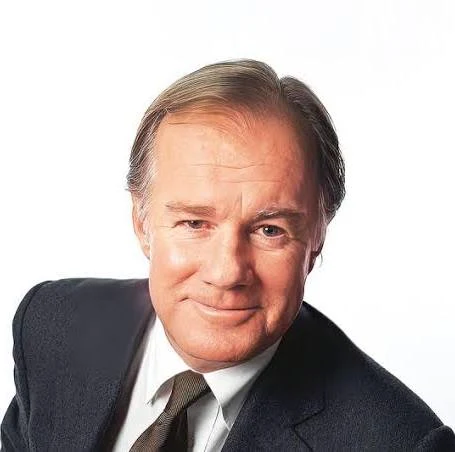
STEFAN PERSSON
H&M chairman who turned his father's single women's clothing store in Sweden into the world's second-largest fashion retailer.
Stefan Persson took H&M from a Swedish high street brand to a global fashion empire with 4,700 stores in 75 countries. He did it by solving fashion's oldest problem: making trendy clothes cheap enough that normal people can actually buy them. His father started with one store in 1947. Stefan turned it into a $20 billion fortune. The clothes are disposable. The wealth is not.
Net Worth
$20 billion
Nationality
Swedish
Time Horizon
Generational
Risk Appetite
4 / 10
CAREER & BACKGROUND
Stefan Persson was born in 1947 in Stockholm. His father Erling Persson founded Hennes (Swedish for "hers") after visiting American retail stores and realizing Europe had nothing like them.
The original concept was simple: fashionable women's clothing at affordable prices.
Stefan joined the company in 1972 and became CEO in 1982. Under his leadership, H&M went from a Scandinavian chain to a global powerhouse.
He pushed aggressive international expansion, opening stores in Germany, the UK, and eventually the United States.
The key insight was speed. While traditional fashion retailers worked on 6-month design cycles, Persson pushed H&M to get new designs from sketch to store in as little as two weeks.
This "fast fashion" model meant H&M could chase trends in real-time rather than guess what would be popular six months out.
Persson served as CEO until 1998 and then as chairman until 2020. During his tenure, H&M grew from about 100 stores to over 4,700.
Revenue went from hundreds of millions to over $23 billion annually.
He also became Sweden's largest individual landowner, quietly buying up vast tracts of forests, farmland, and historic properties across the country.
COMPANIES & ROLES
H&M is the main event. Over 4,700 stores in 75 countries, employing roughly 150,000 people.
The group also owns COS, & Other Stories, Weekday, Monki, H&M Home, and Arket. Each brand targets a slightly different customer but shares the same supply chain efficiency.
Outside H&M, Persson invested heavily in Swedish real estate and land. He owns forests, vineyards, and historic estates across Sweden and Europe.
His property holdings include parts of central Stockholm and English country estates. By some estimates he owns more Swedish land than anyone else in the country.
He also holds a significant stake in Ramsbury Estates in Wiltshire, England, which includes a brewery, a golf course, and thousands of acres of farmland.
INVESTING STYLE & PHILOSOPHY
Persson's investing style is old-money European. He takes the cash flow from H&M and parks it in things that last forever: land, forests, historic properties.
Nothing flashy. Nothing speculative.
He thinks like a steward, not a trader. Land doesn't go to zero.
Forests grow back. Central Stockholm real estate only goes up over generational timeframes.
His portfolio outside H&M reads like a 19th-century aristocrat's estate ledger.
Inside H&M, the approach was volume over margin. Sell more units at lower prices rather than fewer units at higher prices.
Accept thinner margins per garment if it means moving ten times the volume.
THE PLAYBOOK
Risk Approach
Conservative by instinct. Persson never took H&M into heavy debt.
The company has historically maintained a strong balance sheet with minimal borrowing. Even during aggressive expansion phases, growth was funded primarily from cash flow.
The real risk was always reputational. Fast fashion faces constant criticism for environmental impact, labor practices in supply chains, and encouraging disposable consumption.
Persson addressed this by launching H&M's sustainability programs, though critics argue the core business model inherently conflicts with sustainability.
Money Habits
Despite a $20 billion fortune, Persson lives relatively quietly for a Swedish billionaire. He splits time between Stockholm and his English country estates.
He collects art, primarily Nordic contemporary art, but doesn't make a spectacle of it. No vanity museums, no auction house bidding wars.
His land purchases are his real passion. He's reportedly fascinated by sustainable forestry and agriculture.
The English estates are working farms, not just country retreats. He takes the farming seriously.
He flies commercial within Europe. His social circle is old Swedish money rather than the Davos crowd.
He shows up to H&M board meetings and is reportedly still very involved in major strategic decisions despite stepping down as chairman.
BIGGEST WIN
The US expansion. When H&M opened its first American store on Fifth Avenue in New York in 2000, nobody was sure European fast fashion would work in a market dominated by Gap, Limited Brands, and department stores.
It worked spectacularly. The Fifth Avenue opening had lines around the block.
Within a decade, H&M had hundreds of US stores. American consumers loved the combination of trendy designs at prices 60-70% below what they'd pay at department stores.
The designer collaborations starting with Karl Lagerfeld in 2004 were a masterstroke. The idea of a $30 dress designed by the creative director of Chanel caused near-riots in stores.
Every collaboration since has generated massive free publicity. The Balmain x H&M collection in 2015 sold out in minutes.
BIGGEST MISTAKE
Overexpansion and the inventory crisis of 2018. H&M had been opening stores aggressively while online shopping was eating into foot traffic.
By 2018, the company was sitting on $4.3 billion in unsold inventory. The stock dropped 60% from its 2015 peak.
Persson had been slow to invest in e-commerce. While Zara's parent Inditex was integrating online and offline seamlessly, H&M was still treating digital as a side project.
The company had to close hundreds of stores, write off billions in unsold clothes, and invest heavily to catch up online.
The sustainability backlash compounded the problem. Reports of H&M burning unsold clothes generated terrible headlines.
The company that sold $5 t-shirts was being asked to justify its entire existence by environmental activists. They've recovered, but the 2018 crisis shaved billions off Persson's net worth.
FINANCIAL PHILOSOPHY
Make fashion democratic. Persson genuinely believed that well-designed clothes should not be a luxury.
The entire H&M model is built on the idea that a factory worker and a banker should be able to wear similar-looking clothes.
Cash is king. H&M operated with minimal debt for decades.
Persson preferred to grow slower and keep control rather than leverage up and grow faster. When competitors like Forever 21 went bankrupt and Zara's parent company took on debt for expansion, H&M's balance sheet stayed clean.
Design matters, but price matters more. H&M's design team is world-class, regularly collaborating with luxury brands like Versace, Balmain, and Karl Lagerfeld.
But every design has to hit a price point that makes sense for the average consumer.
FAMILY & PERSONAL LIFE
Persson's father Erling founded H&M and remained involved until his death in 2002 at age 85. The founding story is classic post-war entrepreneurship: Erling visited the US in 1946, saw how American retail worked, and came home to Sweden determined to copy it.
Stefan's son Karl-Johan Persson served as H&M's CEO from 2009 to 2020, making it a three-generation family business. Karl-Johan now serves as chairman.
The Persson family collectively controls about 45% of H&M through a holding company structure. The family is wealthy enough to have made Sweden's rich list multiple times, but they maintain a low profile by international billionaire standards.
EDUCATION
Persson studied at the Stockholm School of Economics, one of Scandinavia's top business schools. He also spent time at universities in the UK and US during the 1960s.
His real education, by his own admission, came from working on the shop floor. He reportedly spent years in H&M stores learning every aspect of retail operations before taking any management role.
BOOKS & RESOURCES
Stefan Persson has not written a book and rarely recommends them publicly
He's given very few interviews throughout his career
Explains the fast fashion revolution that H&M helped create
Traces the supply chains behind clothes like those H&M sells
As an Amazon Associate, Netfigo earns from qualifying purchases. Book links above may be affiliate links.
QUOTES (5)
Fashion should be democratic. Everyone deserves to look good, not just people who can afford designer prices.
Speed kills the competition. If you can get from sketch to store in two weeks, nobody can copy you fast enough.
NETFIGO SCORE
Proprietary 5-dimension investor rating
Risk Appetite
Contrarian Index
Track Record
Accessibility
Time Horizon
Related Profiles
Head-to-Head
Compare Stefan Persson vs another investor.