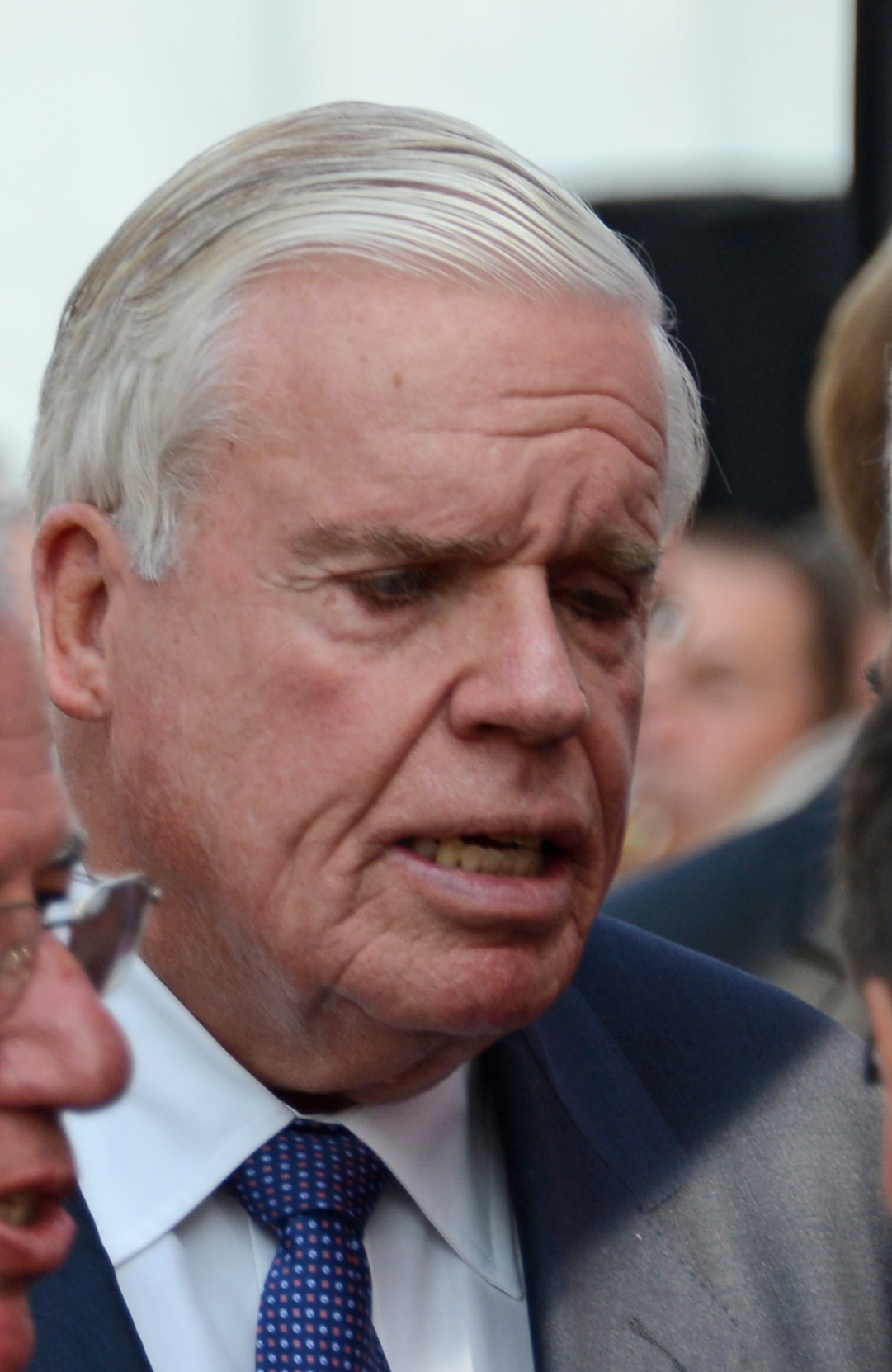
KLAUS-MICHAEL KUEHNE
Turned his family's freight forwarding business into the world's largest logistics company and became Germany's second-richest person.
Klaus-Michael Kuehne inherited a struggling logistics company, bought back the shares others sold off, and rebuilt it into Kuehne+Nagel, the world's largest sea freight forwarder. Then he used the dividends to buy 15% of Hapag-Lloyd, one of the world's biggest container shipping lines. Then he bought 30% of Lufthansa. By his late 80s, he controlled significant chunks of how goods and people move across the planet. Not bad for a guy whose competitors thought the family business was finished.
Net Worth
$36 billion
Nationality
German
Time Horizon
Long-Term
Risk Appetite
6 / 10
CAREER & BACKGROUND
Klaus-Michael Kuehne was born in 1937 in Hamburg. His family founded Kuehne+Nagel in 1890 as a small freight forwarding firm.
The company grew into one of Germany's major logistics operators but was badly damaged during World War II and its aftermath.
Kuehne joined the family business in 1958 and became chairman in 1966, at just 28 years old. The company was struggling.
Post-war logistics was fragmenting, and larger competitors were moving in. His father sold a majority stake to the Lonza Group in the 1960s.
Kuehne spent the next several decades modernizing operations, expanding internationally, and quietly buying back shares. By 2001, he had regained a controlling stake.
He took Kuehne+Nagel public in 1994 on the Swiss stock exchange.
Under his leadership, the company grew from a mid-sized German freight forwarder into the world's largest sea freight and logistics company. Today Kuehne+Nagel operates in over 100 countries with more than 80,000 employees and generates roughly $25 billion in annual revenue.
In his 70s and 80s, Kuehne made his biggest moves. He acquired major stakes in Hapag-Lloyd and Lufthansa, extending his influence from logistics into shipping and aviation.
The pandemic-era shipping boom sent his Hapag-Lloyd stake soaring in value, pushing his net worth past $30 billion.
COMPANIES & ROLES
Kuehne+Nagel is the core. The world's number one sea freight forwarder, arranging the transport of more ocean containers than any other company.
Also a top player in air freight, contract logistics, and overland transport. Revenue around $25 billion.
Hapag-Lloyd is his shipping bet. Kuehne holds roughly 30% of this Hamburg-based container shipping company, one of the five largest in the world with a fleet of about 270 ships.
During the pandemic supply chain crisis, Hapag-Lloyd's profits exploded from $1 billion to over $18 billion in a single year. Kuehne's stake went from a few billion to over $15 billion.
Lufthansa is the aviation play. Kuehne bought roughly 15% of Germany's flag carrier, becoming its largest shareholder.
The airline industry is notoriously unprofitable, but Kuehne sees it as strategically connected to his logistics empire.
He also owns significant real estate in Hamburg and the luxury hotel Schatzalp in Davos, Switzerland.
INVESTING STYLE & PHILOSOPHY
Kuehne invests in what he knows: moving things from point A to point B. Sea freight, air freight, container shipping, airlines.
His portfolio reads like a supply chain textbook.
He's a contrarian buyer. He bought Hapag-Lloyd shares when the shipping industry was deeply out of favor.
He bought Lufthansa when airlines were struggling. He doesn't try to time markets.
He buys assets he understands at prices he considers reasonable and waits.
Concentration over diversification. His entire fortune is built on logistics and transport.
No tech stocks, no crypto, no venture capital. Just ships, planes, and warehouses.
THE PLAYBOOK
Risk Approach
Moderate risk, high conviction. Kuehne doesn't make small bets.
A 30% stake in Hapag-Lloyd. A 15% stake in Lufthansa.
These are multi-billion dollar positions in cyclical industries.
But the risk is mitigated by deep industry knowledge. He's been in logistics for 65 years.
He knows the shipping cycle better than almost anyone alive. When he bought Hapag-Lloyd, he wasn't guessing about shipping economics.
He was betting on a cycle he'd seen play out dozens of times.
The Lufthansa investment is riskier. Airlines have a terrible track record of destroying shareholder value.
Kuehne's bet is that Lufthansa's position as Germany's flag carrier gives it advantages that other airlines lack.
Money Habits
Kuehne lives between Hamburg and Schindellegi, Switzerland. He's been a Swiss resident for tax purposes since 1975, which has occasionally drawn criticism in Germany.
He owns the luxury Hotel Schatzalp in Davos, which he restored from a former tuberculosis sanatorium. It's the hotel that inspired Thomas Mann's "The Magic Mountain." Kuehne is reportedly a literature lover and takes pride in the hotel's literary heritage.
For a man worth $36 billion, he lives relatively quietly. No mega-yacht.
No private island. He's known for being hands-on with his investments, calling CEOs directly and attending board meetings in person well into his late 80s.
His biggest indulgence appears to be Hamburg itself. He's donated hundreds of millions to the city, funding opera houses, concert halls, and public spaces.
The Elbphilharmonie, Hamburg's famous concert hall, received significant support from the Kuehne Foundation.
BIGGEST WIN
The Hapag-Lloyd stake during the pandemic shipping boom. Kuehne had been building his position in Hapag-Lloyd for years when most investors considered container shipping a terrible business.
Returns were low, competition was brutal, and overcapacity was chronic.
Then COVID hit. Supply chains collapsed.
Container rates went from $1,500 per box to over $20,000. Hapag-Lloyd's profits went from $1 billion to over $18 billion in a single year.
Kuehne's stake was suddenly worth north of $15 billion.
He hadn't predicted the pandemic, obviously. But he'd bet on an industry he understood at a price that gave him massive upside if anything went right.
Something went very right.
BIGGEST MISTAKE
The Lufthansa investment hasn't yet proven to be a winner. Airlines are notoriously cyclical, capital-intensive, and prone to external shocks.
Kuehne bought in expecting post-COVID recovery, but the airline industry's profit margins remain thin.
Earlier in his career, letting the family lose its controlling stake in Kuehne+Nagel was a costly error. It took decades and billions to buy back what his father sold cheaply.
The lesson was painful: never let go of a great asset at a bad price.
FINANCIAL PHILOSOPHY
Buy what you understand deeply and hold it through cycles. Kuehne has lived through oil crises, recessions, wars, and pandemics.
Each time, logistics volumes eventually recover. Ships need to sail.
Planes need to fly. Goods need to move.
He also believes in owning enough to matter. A 2% stake means you get ignored.
A 15-30% stake means you get a board seat and influence over strategy. Kuehne doesn't buy shares for passive income.
He buys them for influence.
Private wealth, public impact. Through the Kuehne Foundation, he's donated over $1 billion to medical research, logistics education, and humanitarian aid.
The foundation funds the Kuehne Logistics University in Hamburg, which trains the next generation of supply chain professionals.
FAMILY & PERSONAL LIFE
Kuehne married Christine Kuehne but has no children. This makes his succession planning uniquely straightforward: the Kuehne Foundation will inherit his wealth.
He's been open about the fact that having no heirs shaped his philanthropic philosophy. He once said that when you have no children, your legacy has to be your work and your giving.
The foundation is structured to continue funding logistics education, medical research, and humanitarian projects indefinitely.
His relationship with Hamburg is deeply personal. His family has been in the city for over a century, and he sees his investments in the city's culture and infrastructure as a generational obligation.
EDUCATION
Kuehne studied business administration in Hamburg and completed internships at logistics companies in London and New York. He joined the family business at 21 and never left.
His founding of the Kuehne Logistics University in 2010 reflects his belief that logistics is an underappreciated discipline. The university offers specialized degrees in supply chain management and has become one of the most respected programs in the field.
BOOKS & RESOURCES
Kuehne has not written an autobiography, though his life story has been covered extensively in German business media.
Tells the story of container shipping, the industry that made Kuehne's fortune possible. It's the best book ever written about how a simple metal box changed global trade
Covers the modern logistics industry that Kuehne+Nagel dominates
As an Amazon Associate, Netfigo earns from qualifying purchases. Book links above may be affiliate links.
QUOTES (5)
Logistics is the backbone of the world economy. Everything you touch was moved by someone like us.
Buy enough shares to matter. A two percent stake means you get a thank-you note. A twenty percent stake means you get a board seat.
NETFIGO SCORE
Proprietary 5-dimension investor rating
Risk Appetite
Contrarian Index
Track Record
Accessibility
Time Horizon
Related Profiles
Head-to-Head
Compare Klaus-Michael Kuehne vs another investor.